Culture
Candi bentar: the split gates of Balinese temples
What a candi bentar is, where it stands in a Balinese temple, how it is often read, and how to visit with respect.
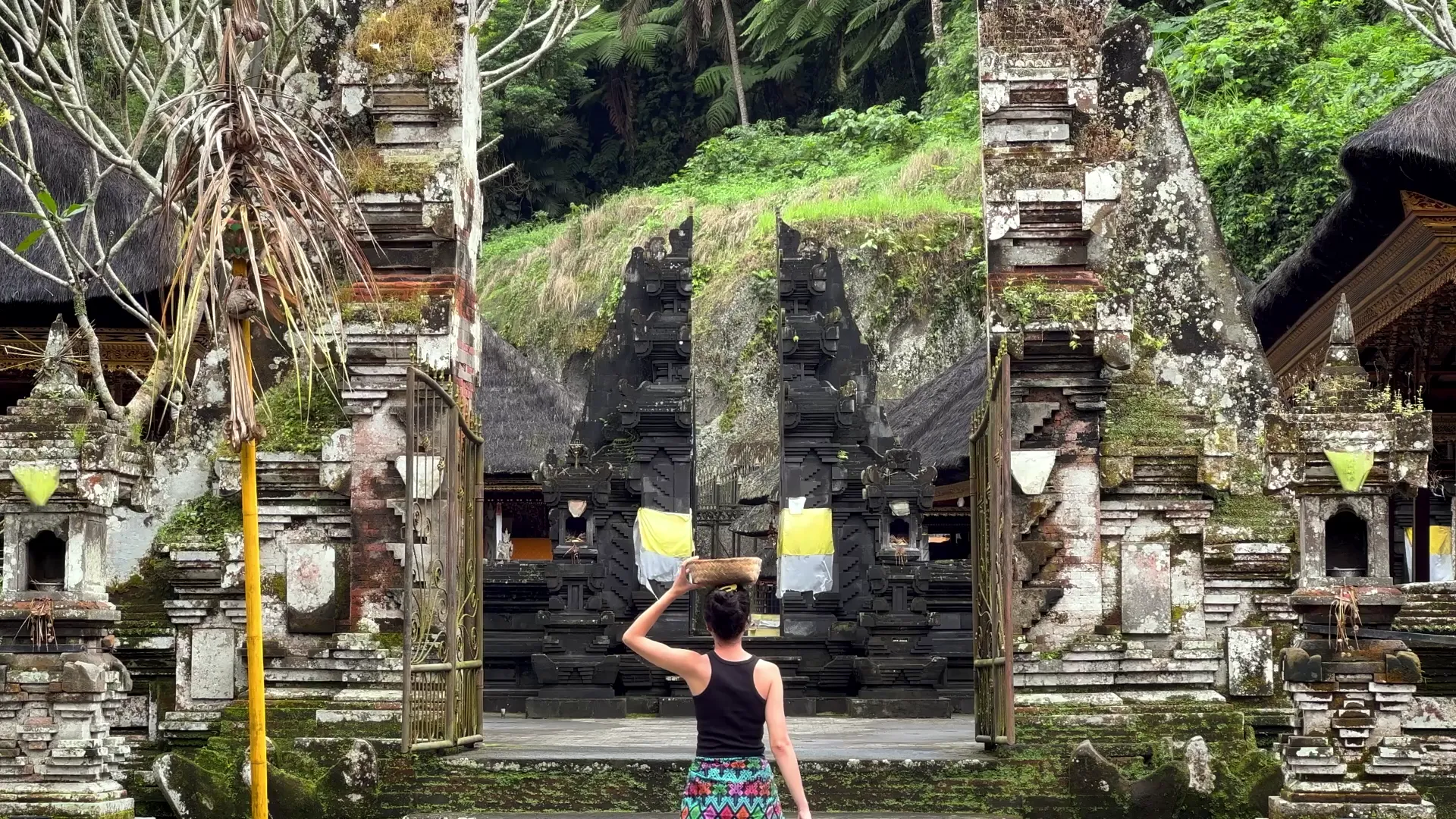
Anyone who has visited a temple in Bali has walked through a candi bentar. It is the split gate: two mirrored towers with an open passage between them, usually built of stone or brick and set at the entrance to a temple compound.
Where you find it
In a Balinese temple, or pura, the candi bentar usually stands at the entrance to the outer courtyards. Further in, a roofed gate known as the kori agung or paduraksa leads to the innermost courtyard. Split gates also mark the entrances of palaces and other important buildings.
How it is often read
The two halves are commonly described as a mountain split in two, opening a path for those who enter. Many also see the pair as an image of balance between opposites, a theme known in Bali as rwa bhineda. Readings vary between villages and teachers, and the gate means most to the community that worships there.
Visiting with respect
- Wear a sarong and sash; many temples lend or rent them at the entrance.
- Follow local guidance on which areas are open to visitors, especially during ceremonies.
- Do not climb on gates, shrines or walls, and ask before photographing people at prayer.
The gate on our label
The TOYA sah glass bottle label carries a split-gate motif. We use it as a sign of place: the brand is made for Bali, and the gate is one of the island’s most recognisable forms. The motif is not a claim about the water.
Questions about TOYA sah for your table? Chat with us on WhatsApp.